

It is 1993, and I am sitting on a couch at a friend’s house with about a dozen others, watching the now cult classic crime drama Blood in Blood Out. The film follows the lives of 3 young Mexican American gang members as they start as gang members in East LA. It’s filled with cartoonish portrayals of violence mixed with imaginary ideas of honor and masculinity.

I remember all of us shouting out vatso locos and calling each other Cardinal for weeks after watching this.

Being 16 years old and male, we are the target audience for this film as young men and violence go hand in hand, something to do with building self-confidence and personal empowerment.
But several of my friends watching this film are getting something out of it that I am not. Eight of my friends in the room are Mexican Americans, residents of the United States and have full or partial Mexican ancestry. This is the first time they have seen what they think is a positive and powerful representation of their people in a movie, although they are entirely wrong.


Hollywood has long portrayed Mexican Americans as one-dimensional stereotypes of maids, laborers, gang members and drug lords.
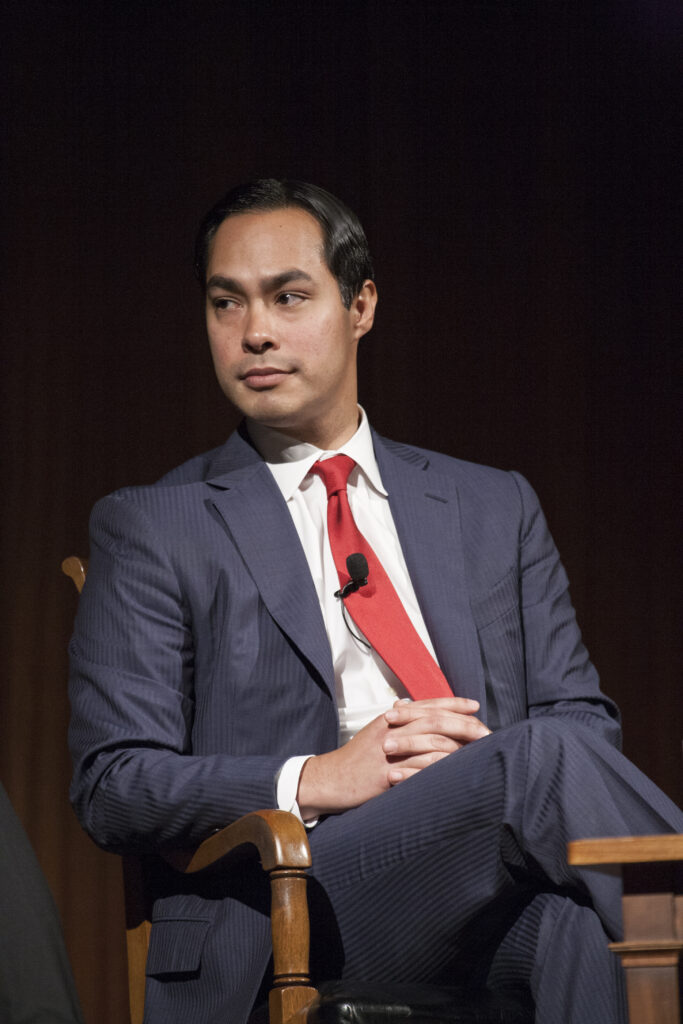
Texas Congressman Joaquin Castro(D) has stated, “Latinos are effectively excluded or sidelined from much of American media,” and he is not wrong.

The Bronze Screen is a documentary that examines, analyzes, and critiques the portrayal of Latinos in Hollywood over the past century. It divides media stereotypes into 22 sections, with titles like “Hollywood’s first bad guy,” “If You Talk Like Deez,” and “Cowboys and Mexicans.”
Blood in Blood Out plays into all of these stereotypes, with villainous Latino youths speaking in Spanglish( a blending of Spanish and English words in the same sentence)and battling against the police.
This is an inaccurate portrayal of what Mexican Americans bring to society.
California’s Hispanic population is the largest racial or ethnic group, making up 39.4% of the state’s population. The U.S. Latino GDP has reportedly reached $3.7 trillion, outpacing six of the world’s ten largest economies.

So, where is that narrative in today’s media?
Activists have looked to create films that challenge the stereotype of Hispanics as harmful to society by showing that Americans can’t exist without them in movies like “A Day Without a Mexican”.


Mexican-American actor Frankie Quinones has to turn the long-standing gang member stereotype on its head with his comedy series This Fool. In the series, Quinones plays a former gang member released from prison to live with his cousin, who works to create a better community while living a working-class life in an LA neighborhood.

Television star and film producer Eva Longoria is working to bring the inspiring aspects of Latino life to the screen with films like Flamin Hot, which follows a Mexican American journey from a hard-working janitor to a corporate success.


Where Mexican American voices are missing.
I have heard about total shock multiple times. Sports media personalities often state that they first met someone of color in college. This shouldn’t be surprising, seeing that the top ten schools are in areas in the upper northeast that are not very racially diverse.

Newsrooms remain primarily white, with as many as 76% in a Pew research survey.
According to a Government Accountability Office (GAO) report, Hispanics, including Mexican Americans, only makeup 12% of the media workforce.

Even with the best of intentions, white journalists from parts of the country with little understanding of Hispania or Mexican American culture can misrepresent or leave out perspectives from this diverse ethnic base.
This is shown in the recent national “Day without an Immigrant Protest.” Journalists around the country filmed protesters, spoke with them and interviewed activists. Through this lens, they created a narrative of angry, ungrateful young people with street vendor-level jobs or political roles.


The lack of major journalism outlets understates this diverse group of people.
They failed to get the perspective of the middle and upper-class Mexican Americans who contribute to the economy, not as gardeners and house cleaners. But as firefighters, police officers, and small business owners who are not in favor of illegal immigration and want these laws enforced.

By leaving voices that disagree out of the conversation, newsrooms miss the opportunity to tell a completely diverse story and create a situation where they only promote voices that confirm their own biases, which builds distrust in the community they are supposed to speak for.
In film, television and journalism, modern media continues to fail to tell the whole Mexican American experience. While the days of this diverse group of people were shown only as gang members in feature films, they were still stereotyped by major media outlets as low-wage drags in society that needed to do things illegal to get by. Nothing is further from the truth, and with a real focus on diversity in media, these stories will continue to come to light.